News
Safer Skies, Safer Pipelines: Aerial Methane Detection Guide
The New Standard in Midstream Integrity
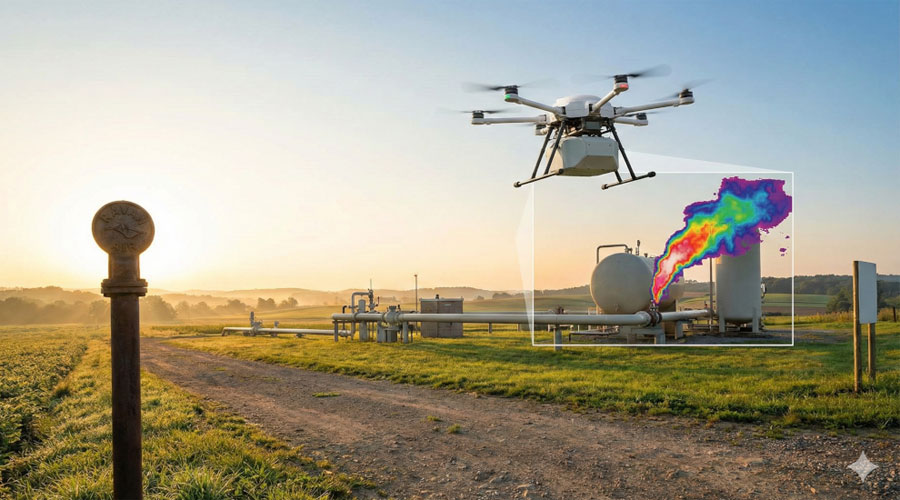
Here at RAVAN AIR we like to make the energy world safer and cleaner. One of the biggest ways we do this is by using aerial methane detection technology, that is detecting methane from the air. In the old days, workers had to walk along pipelines with handheld tools. This was slow and sometimes dangerous. Now, we use drones to look down from the sky. This change is making our skies safer and our pipelines stronger.
When we talk about finding methane from the air, we are talking about a big shift in how we take care of our planet. Finding leaks in the oil and gas world is hard because you cannot see the gas with your eyes. But with aerial methane sensors, the invisible becomes visible, using specialized sensors. We can find big leaks, which we call super emitters, very quickly. This helps companies save money and protects the air we breathe. Using aerial methane detection tools is not just a trend. It is the new way we do business in 2026.
The Tech Stack: How We See the Invisible
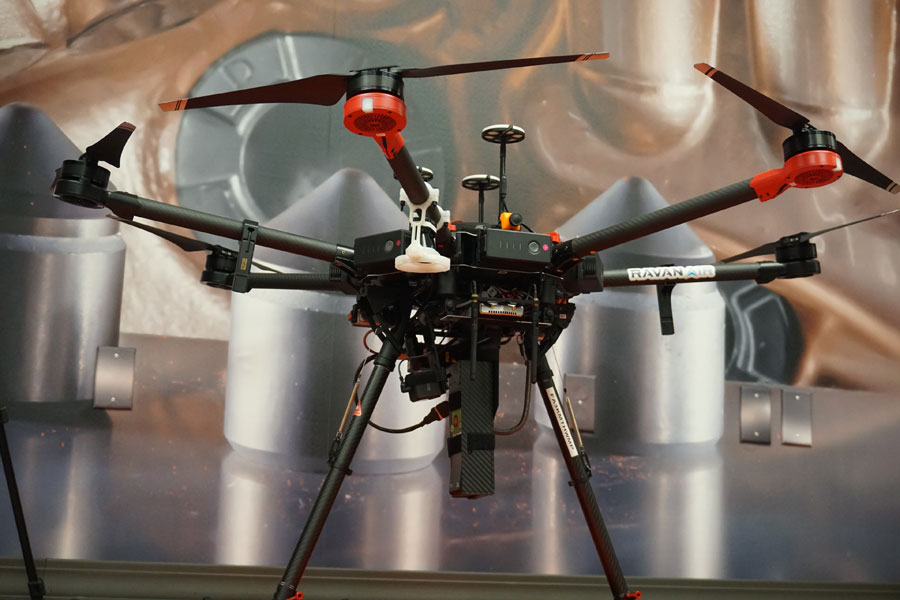
To understand methane in the air, we have to look at the gear we put on our drones. We use a mix of high tech sensors to find gas from the air. For aerial methane we use a tool called TDLAS. This stands for Tunable Diode Laser Absorption Spectroscopy. It sounds fancy, but the idea is simple. The drone shoots a laser beam at the ground. If there is methane in the way, the laser changes. The sensor measures how much the light changed. This tells us exactly how much aerial methane is in the air. We measure this in something called parts per million meters, or ppm-m.
We also use hyperspectral imaging for aerial methane surveys. These cameras look at many different colors of light that our eyes cannot see. Every gas has its own light fingerprint. By looking for the methane fingerprint, we can spot leaks across a huge area. Companies like DJI and Teledyne FLIR make the drones and cameras we use for aerial methane work. By using these tools, we can make sure no leak goes unnoticed.
Regulatory Landscape and Compliance
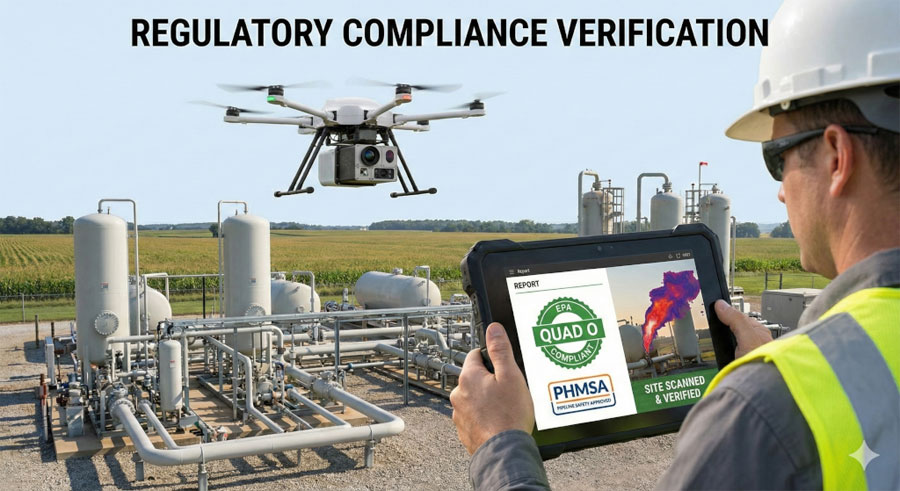
In 2026, the rules for methane are very strict. The EPA and other groups want to make sure companies are not letting gas escape. One of the big rules is called Subpart OOOOa, or Quad Oa. It tells companies they must check their equipment for leaks often. Using aerial methane drones helps companies follow these rules without having to send crews out to every single well pad on foot.
The Super Emitter Program is another big part of aerial methane rules. If a sensor sees a very large leak from the sky, the company has to fix it fast. Surveying for methane from the air is the best way to find these big leaks. In places like the Permian Basin or the Marcellus Shale, aerial methane flights happen every day. These flights help the industry stay in line with the Global Methane Pledge. This is a promise made by many countries to cut down on gas leaks.
The Pipeline and Hazardous Materials Safety Administration (PHMSA) also has new rules for aerial methane in 2025. They want pipelines to be safer for everyone. By using aerial methane technology, we can scan hundreds of miles of pipe in a short time. This keeps the gas inside the pipes where it belongs. Following these rules is good for the environment and good for business. Detecting methane from the air is the key to meeting these high standards.
Common Questions about Aerial Methane
People often have questions about how aerial methane works. One big question is: can drones find methane in the winter? The answer is yes. Even when there is snow on the ground, aerial methane sensors can still see the gas. Sensors like TDLAS do not need warm weather to work. This makes aerial methane a great tool for places like North Dakota or Pennsylvania during the cold months.
Another question is: how sensitive is aerial methane detection gear? Most of our drones can find very small leaks. We can usually see a leak that is about one to three kilograms per hour. This is very small, like a tiny hiss from a valve. Aerial methane technology is getting better every year. Soon, we might be able to see even smaller amounts of gas from the sky.
People also wonder if detecting methane aerially is safer than ground work. It definitely is. When we use aerial methane drones, our workers stay at a safe distance. They do not have to walk through tall grass or climb over rocky hills. They also stay away from the gas itself. This makes aerial methane the safest choice for leak surveys.
Lastly, people want to know about the cost. Is aerial methane detection cheaper? Yes, in the long run. Even though the drones are expensive, they work much faster. An aerial methane team can do the work of five ground teams in one day. This saves a lot of money on labor. It also finds leaks faster, which saves the gas so it can be sold. Catching aerial methane, before it is lost, is a smart investment for any oil and gas company.
Data Integrity and Quantification
When we do an aerial methane survey, we don’t just want to find the leak. We want to know how big it is. This is called quantification. We use math to figure out how much gas is escaping every hour. For the report, we look at the wind speed and the size of the gas cloud. This helps us tell the company if they have a small problem or a big emergency.
Data integrity is also very important in detecting methane. This means the data must be correct and honest. We use RTK technology to make sure our maps are perfect. RTK helps the drone know its exact spot within a few inches. When we find methane leaking into the air, we can give the repair crew a precise GPS point. They can drive right to the spot and fix it.
We also make something called a Digital Twin. This is a 3D model of the oil site on a computer. We put the aerial methane data on top of this model. This lets managers see exactly where the leaks are from their office. Having good data makes it easy to plan repairs. It also helps with ESG reporting. This is how companies show they are being responsible.
The 2026 Edge: AI and BVLOS
The future of aerial methane detection is here, and it involves AI. Artificial Intelligence helps us find leaks faster. Instead of a person looking at hours of video, the computer finds the aerial methane plumes for us. It can spot the shape of a gas cloud in a split second. This makes methane surveys much more accurate. We can find leaks that a human eye might miss.
We are also starting to use BVLOS for aerial methane detection. BVLOS stands for Beyond Visual Line of Sight. This means the drone can fly far away from the pilot. In the past, the pilot had to keep the drone in sight. Now, with new rules, we can fly aerial methane detection drones for many miles. This is great for checking long pipelines that go through the woods or over mountains.
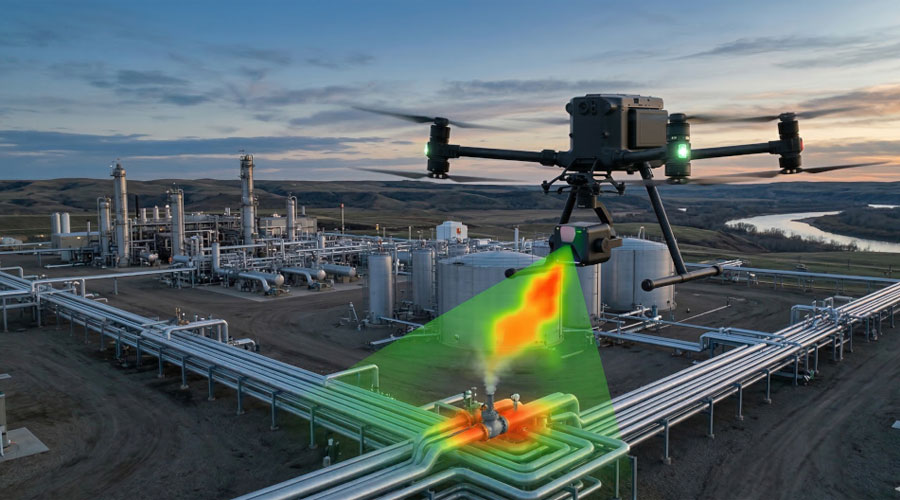
Combining satellites with the drones is another new trick. Satellites can see huge leaks from space. Once a satellite sees a big cloud, we send an aerial methane drone to find the exact pipe that is leaking. This hybrid approach is the best way to keep our air clean. As technology grows, detection of methane will become even more common. It is the best tool we have for a greener future.
The Future is Aerial Detection of Methane
In the end, being able to detect methane in the air is changing the oil and gas world for the better. It makes surveys faster, safer, and more accurate. As a company that cares about data and innovation, we am proud to work with aerial methane detection technology. We are moving away from the old ways of doing things. We are using the sky to protect the ground.
At RAVAN AIR, we know that detection of methane from the air is the key to success. Companies that find the methane will save money and avoid fines. More importantly, they will do their part to stop climate change. Finding and fixing gas leaks is one of the best things we can do for our planet. Aerial methane detection makes this possible on a large scale.
If you are looking to improve your leak surveys, think about the power of the sky. Detecting methane is not just about drones. It is about having the best data to make the best choices. Whether you are in Pittsburgh or Texas, aerial methane detection is the way to go. Let’s work together to keep our pipelines safe and our skies clear.