News
Emergency Response Technology: Using Drones and Probes to Assess Disasters & Leaks
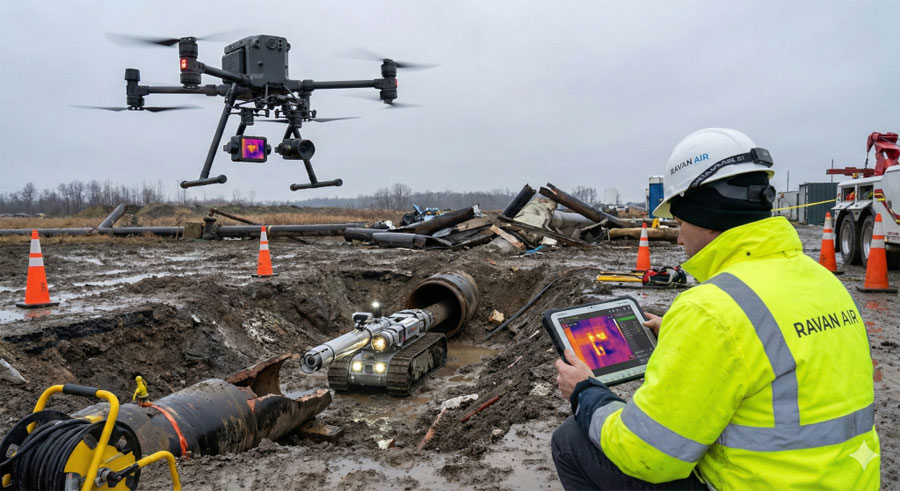
At RAVAN AIR as experts and project managers for pipeline projects across the country, we have seen what happens when things go wrong. Whether it is a burst water main in a city street or a methane leak in a remote field, the stakes are always high. At RAVAN AIR, we focus on the high-tech side of things. We use cutting edge tools that did not exist even two decades ago.
Today, we want to talk to you about how we handle the toughest situations using emergency response technology. It is not just about having fancy gadgets. It is about having the right data to make fast, safe decisions when every second counts. Here in western Pennsylvania, we have spent plenty of time fishing and hunting in the woods, so we know how hard it can be to find something hidden in the brush. Finding a tiny leak in a mile-long pipe is even harder. That is why we rely on modern science to give us an edge.
In this article, we are going to look at how drones and probes help us see what is happening above and below the ground. Our goal is to show you how these tools make our world safer and our repairs much faster.
Aerial Intelligence: Drones as First Responders
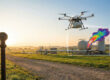
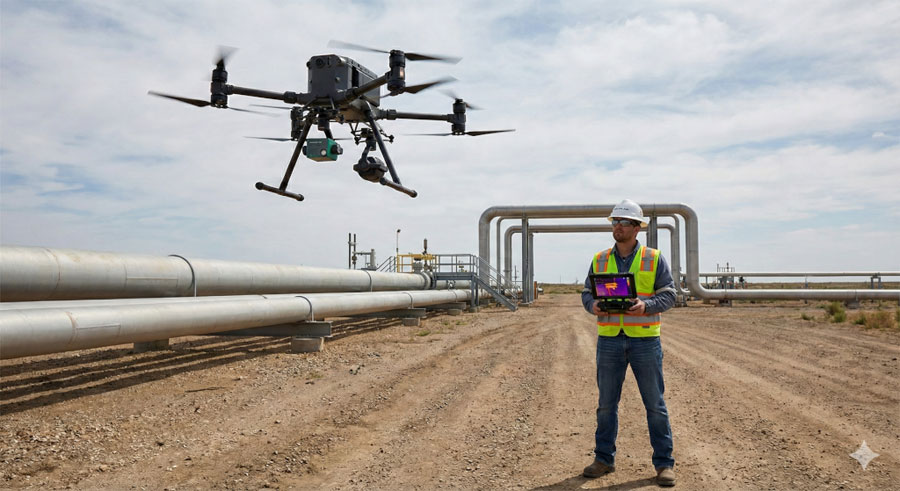
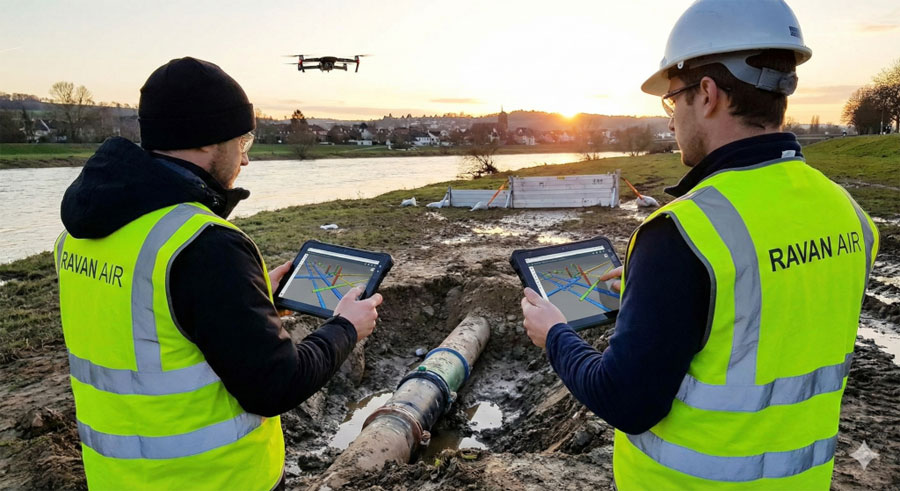
When a disaster happens, the first thing we need to do is get a clear picture of the area. In the past, we had to send a person out to walk the line. This was slow and often dangerous. Now, we use drones as a key part of our emergency response technology. Drones allow us to stay at a safe distance while getting a view that a person on the ground could never see. At RAVAN AIR, we use specialized drones equipped with sensors that do much more than just take pictures.
One of our most important tools is the Pergam methane detector. This is a laser-based sensor that can find natural gas leaks from the air. It works by sending a laser beam down to the ground. If there is methane in the air, the laser changes in a way that the sensor can read.
This is a vital piece of emergency response technology because gas leaks can be invisible and odorless. In an emergency, we can fly a drone over a pipeline and find exactly where the gas is escaping without putting a technician in a dangerous spot. This keeps our team safe and allows us to tell the repair crews exactly where to go.
We also use thermal imaging cameras, often called FLIR cameras. These cameras see heat instead of light. In a disaster, heat can tell us a lot. If a pipe is leaking underground, the liquid or gas coming out might be a different temperature than the soil around it. On the drone screen, this shows up as a bright spot or a dark patch. This type of emergency response technology is also great for finding “hill slips” or landslides. If the ground is moving near a pipe, it creates friction and changes the way the soil holds heat. By seeing these thermal patterns, we can predict where a pipe might break before it actually happens.
Another big advantage of using drones in our emergency response technology is the ability to map a site in three dimensions. We use a tech called LiDAR, which stands for Light Detection and Ranging. The drone sends out thousands of laser pulses every second. These pulses bounce off the ground, trees, and buildings. The computer then builds a 3D map that is accurate within an inch. If a flood or an earthquake has changed the landscape, this 3D map helps engineers understand how the land has shifted. It is a fast way to see if the ground above a buried pipe is still stable.
All the data we collect from the air is georeferenced. This means every picture and every sensor reading has a GPS tag attached to it. When we find a problem, we can give the exact coordinates to the client. This level of precision is why emergency response technology has become so popular in the industrial world. We are not guessing where the problem is. We are proving it with data.
Sub-Surface Precision: Probes and Underground Robotics
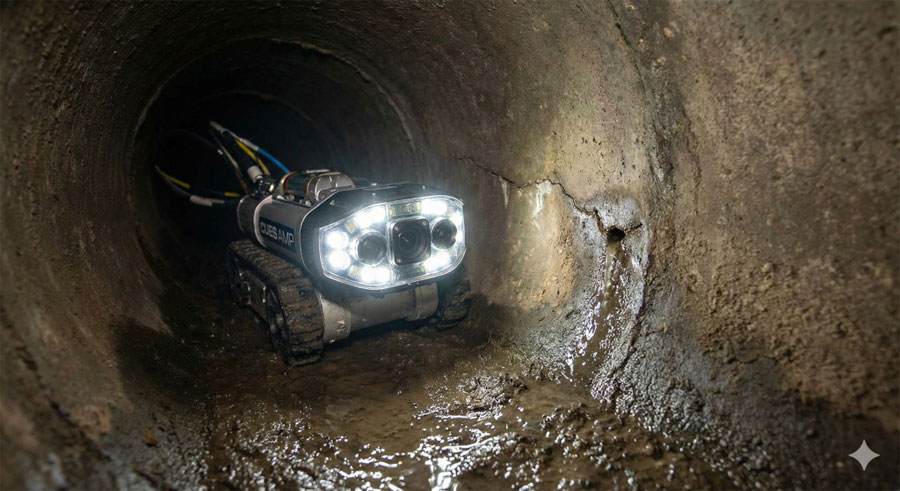
While drones give us the view from above, we also need to know what is happening inside the pipes. Underground pipes are like the veins and arteries of our cities. When one of them fails, it can cause a huge mess. To fix things fast, we use robots and probes as part of our emergency response technology. One of the best tools we have at RAVAN AIR is the CUES AMP, which stands for Accurate Mapping Probe.
Think of the AMP as a high-tech hiker for a pipe. It is a gyroscopic probe that we pull through the pipe. It does not need a GPS signal because GPS does not work underground through layers of dirt and metal. Instead, it uses internal sensors to track exactly how it moves in three dimensions. It records the X, Y, and Z coordinates of the pipe. This is a crucial piece of emergency response technology because many old pipes were never mapped correctly. If a disaster happens and we do not know exactly where the pipe is, we might dig in the wrong place. The AMP tells us exactly where the pipe sits and if it has shifted or bent due to ground movement.
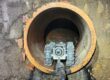
We also use Multi-Sensor Inspection, or MSI. This involves a robot crawler that carries several different sensors at once. It might have a high-definition camera, LiDAR, and a sonar unit. The LiDAR measures the shape of the pipe above the water line. It can tell us if a pipe is starting to collapse or if it is becoming oval-shaped because of the weight of the dirt above it. The sonar unit works under the water. It uses sound waves to “see” through the liquid and find piles of debris or holes in the bottom of the pipe. Combining these tools into one emergency response technology package gives us a full 360-degree view of the pipe.
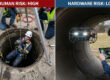
In an emergency, speed is everything. That is why we have dedicated camera trucks. These trucks are mobile command centers. We can drive them to a site, deploy a robot into a manhole, and start seeing inside the pipe in minutes. The video is sent back to the truck in real-time. When we see the live feed from a robot, we can quickly tell if a crack is a minor issue or a major structural failure. This quick assessment is what makes emergency response technology so valuable. It turns a guessing game into a planned repair.
Using these probes also helps us with something called I&I, which stands for Inflow and Infiltration. During a big storm or a flood, extra water can leak into sewer pipes. This can overwhelm the system and cause backups into people’s basements. By using our probes and cameras, we can find the exact spots where the water is getting in. This is a key part of using emergency response technology to protect a community after a natural disaster.
Common Questions Answered about Emergency Response Technology
Why are drones are used in emergency response? The answer is simple: they provide speed and safety. In a disaster, the environment is often unstable. There might be fire, chemicals, or falling debris. A drone can fly over a fire or a chemical spill and send back high-resolution video without risking a human life. This makes the drone a primary tool for any modern emergency response technology kit. It lets the leaders in charge see the big picture and decide where to send help first.
Can thermal imaging really find gas leaks? Yes, it can, but it is not just about seeing the gas itself. It is about seeing how the gas affects the temperature of the things it touches. When gas leaks out of a pressurized pipe, it often cools down very quickly. This creates a cold spot on the ground or on the pipe. This part of emergency response technology is a game changer for the oil and gas industry because it allows us to find leaks that are otherwise invisible.
What are the benefits of using drones for pipeline inspections? The biggest benefit is the cost and the quality of the data. Before we had drones, companies used to hire helicopters to fly over pipelines. Helicopters are very expensive and they have to fly much higher up. Drones are cheaper, they can fly closer to the ground, and they can hover in one spot to get a perfect look at a problem area. This makes them a more efficient form of emergency response technology. Plus, the data from a drone can be plugged directly into a computer to make a map, which a helicopter pilot simply cannot do as easily.
Can these robots can work in any pipe? Most of the time, the answer is yes. We have different sizes of robots for different sizes of pipes. Some are small enough to fit in a house drain, while others are large enough to crawl through a massive storm tunnel. This versatility is what makes our emergency response technology so effective across different industries. Whether it is a city sewer or an industrial chemical line, we have a tool that can get the job done.
Technical Standards and Compliance
At RAVAN AIR we follow very strict rules to ensure the quality of the work. When we use emergency response technology, we have to make sure our data is accurate and our pilots are safe. This means following standards set by groups like NASSCO, which stands for the National Association of Sewer Service Companies.
We make sure our team is certified in PACP, MACP, and LACP. These are coding systems for describing what we see in a pipe. PACP is for pipes, MACP is for manholes, and LACP is for lateral lines. By using these standard codes, everyone in the industry knows exactly what a “Code 4 Crack” means. This is important for emergency response technology because it ensures that the engineers who have to design the fix understand exactly what the problem is. There is no room for “maybe” when you are dealing with a potential disaster.
We also have to follow FAA rules for our drones. Every one of our drone pilots is certified under Part 107 of the FAA regulations. This means they understand the laws of the sky. In an emergency, the air can get crowded with news helicopters and search and rescue teams. Our pilots know how to coordinate with other flyers to keep the site safe. This level of professionalism is a core part of how we handle emergency response technology. We are not just flying toys; we are operating industrial equipment in a complex environment.
The software we use is also a big part of our standards. We use programs like GraniteNet and SewerAI. These tools help us organize the massive amount of video and data we collect. SewerAI is particularly interesting because it uses computer brains, or artificial intelligence, to look at the video and spot problems automatically. This speeds up our reporting process. In an emergency, being able to deliver a report in hours instead of days is what makes our emergency response technology stand out. It gives the decision-makers the facts they need right away.
Data integrity is one of our core values. We make sure that every bit of data we collect is saved and backed up. If a client needs to look at a video from a year ago to compare it to a new disaster, we have it ready. This long-term record-keeping is a vital part of emergency response technology. It helps us see how a pipe system is aging over time and where the weak spots are likely to be.
Disaster Mitigation: From Recovery to Prevention
The best way to handle a disaster is to prevent it from happening in the first place. That is what we call mitigation. We use our emergency response technology to look for warning signs before a pipe fails. By doing regular inspections, we can find small cracks or areas of corrosion and fix them while they are still small problems. This saves money and protects the environment.
One way we do this is through 3D modeling. We can create a “digital twin” of a pipeline system. This is a perfect computer model that shows every bend and every joint. We can use this model to run simulations. For example, we can see what might happen to the pipes if there is a big flood or a landslide. This type of emergency response technology allows us to reinforce the pipes that are most at risk. It is a proactive way to manage infrastructure.
We also focus on cross bore prevention. A cross bore happens when a new utility line, like a gas pipe, is accidentally drilled right through an existing sewer pipe. This is very dangerous because it can cause a gas leak inside a building. We use our probes and cameras to check for these issues during and after construction. Using emergency response technology to find cross bores can literally save lives by preventing explosions.
Post-disaster recovery is another big area. After a hurricane or a major storm, the ground is often saturated with water. This can cause pipes to float or shift. We deploy our drones to check the Right of Way for any signs of earth movement. We then send in our probes to check the internal health of the buried assets. This two-pronged approach is the gold standard for emergency response technology. It covers every angle and leaves nothing to chance.
Why Technology is the Ultimate Safety Net
In the end, it all comes down to safety and reliability. At RAVAN AIR we have seen how much better things are now than they were twenty years ago. The use of emergency response technology has changed the way we think about infrastructure. We no longer have to wait for a sinkhole to appear to know there is a problem. We have the tools to see through the ground and into the pipes.
At RAVAN AIR, we believe in being competent and innovative. We are always looking for the next piece of emergency response technology that can help our clients. Whether it is a better sensor for a drone or a faster robot for a sewer, we stay on the leading edge. But we also remember that the technology is just a tool. It takes an expert eye to understand what the data is saying. That is where my experience in mechanical engineering and project management comes into play. I make sure that the data we collect leads to the right decisions.
If you are a business owner or a city manager, you know how much stress a disaster can cause. Having a partner who understands emergency response technology can take a lot of that weight off your shoulders. We can provide the fast, accurate answers you need to get things back to normal. We are based in northwestern Pennsylvania, and we have the grit and the knowledge to handle the toughest jobs in the country.
Emergency response technology is not just a buzzword. it is a set of real, powerful tools that protect our water, our gas lines, and our communities. By combining aerial drones with sub-surface probes, we get a complete picture of our world. It is a safer, smarter way to work. If you ever have questions about how we can help you with your pipelines or drones, do not hesitate to reach out at RAVAN AIR or 814-382-0368. RAVAN AIR is here to help you stay ahead of the next emergency.