News
Understanding NASSCO Certification: The Standard for Quality in Pipeline Assessment (PACP, MACP, LACP)
The Critical Need for a Common Language
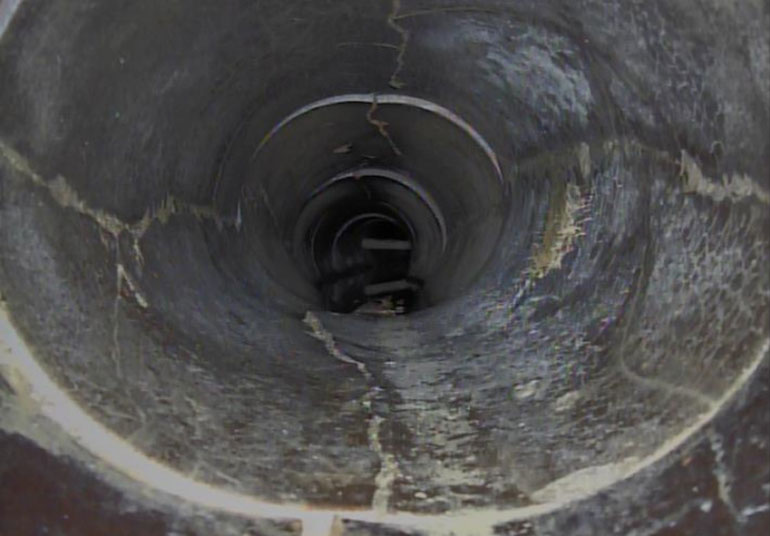
The underground infrastructure in the United States is a ticking time bomb. Beneath our feet, thousands of miles of pipe are aging, cracking, and slowly failing. Here at RAVAN AIR we can tell you that the biggest challenge we face is not just finding the problem. The real challenge is describing the problem so that everyone understands it the same way.
Imagine you hire two different inspectors to look at a sewer line. One inspector looks at a video feed and sees a “bad crack.” The other inspector looks at the same feed and calls it a “fracture with soil visible.” These might sound similar, but in the world of engineering, they mean two very different things. One might require a simple patch, while the other could signal a sinkhole is about to open up.
When inspectors use different words for the same problem, utility owners waste millions of dollars fixing the wrong things or missing critical failures.
This is where the NASSCO Certification comes into play. NASSCO, or the National Association of Sewer Service Companies, created a standardized language to bring clarity to the confusion. They developed a system that turns subjective opinions into objective data. We know that without a standard way to speak about pipes, we are just guessing. This article explains why this certification is the most important tool in our industry and how it saves money, time, and safety.
What is NASSCO? (The Authority)
To understand the importance of NASSCO Certification, you first have to understand the organization behind it. NASSCO is a group of industry professionals who set the standards for assessing, maintaining, and fixing underground utilities. Their goal is to ensure that when we look at a pipe, we are all seeing the same thing.
Years ago, the industry was the “Wild West.” Every contractor had their own codes and their own names for defects. It was a mess. NASSCO looked at this problem and partnered with the Water Research Center (WRc) in the United Kingdom. The UK had already figured out a coding system for their sewers. NASSCO adapted this system for North America.
The result is the Pipeline Assessment Certification Program, or PACP. This is not just a checklist. It is a rigorous way to catalog every inch of a pipe. It has turned video inspections into engineering data. Today, NASSCO Certification is required by almost every major municipality and engineering firm in the country. If you do not have it, you are not touching their pipes. It ensures that the data we collect at RAVAN AIR is accurate, consistent, and ready for engineers to use.
The “Big Three” Certifications Explained
When people talk about NASSCO Certification, they are usually talking about a family of three distinct programs. Each one focuses on a different part of the sewer system. To get a complete picture of an underground network, you need to understand all three.
PACP (Pipeline Assessment Certification Program)
The PACP is the grandfather of them all. It focuses on the main sewer pipes. These are usually the pipes that run down the center of the street, collecting waste from all the houses and businesses. These pipes are typically 8 inches in diameter or larger.
The core of the PACP is its coding system. It splits defects into two main categories. First, you have Structural Defects. These are things that affect the physical strength of the pipe, like cracks, fractures, and breaks. Second, you have Operation and Maintenance (O&M) Defects. These are things that clog the pipe or reduce flow, like roots, grease, or debris.
A holder of a NASSCO Certification in PACP knows exactly which code to use. They do not guess. If they see a crack, they measure it.
They look at the clock position on the screen (is the crack at 12 o’clock or 3 o’clock?). They record it in a specific format. This creates a database that can be compared year after year.
MACP (Manhole Assessment Certification Program)
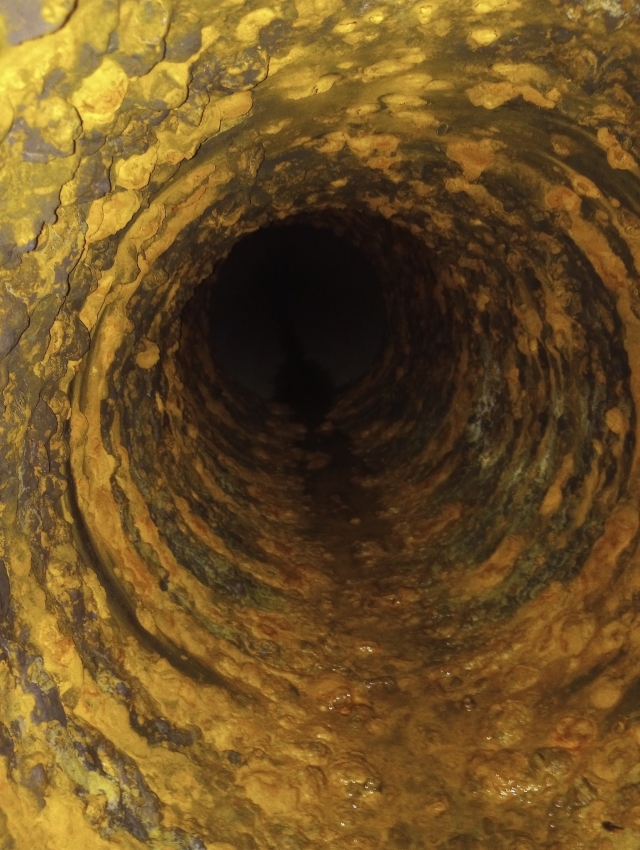
While pipes run horizontally, manholes run vertically. This presents a totally different set of challenges. The MACP was created because manholes are complex structures. They are built from different materials like brick, concrete, or plastic. They have steps, cones, walls, and benches.
Inspecting a manhole is often harder than inspecting a pipe. You have to look at the frame and cover on the street, the chimney section, and the walls all the way down to the bottom. The MACP standard breaks this down into two levels.
Level 1 is a basic condition assessment. It is a quick look to see if there are major issues.
Level 2 is a full structural audit. This requires a detailed inspection of every single component.
Achieving NASSCO Certification for MACP means an inspector understands how to document these vertical assets so engineers can decide if they need to be lined or replaced.
LACP (Lateral Assessment Certification Program)
The lateral is the pipe that connects a building to the main sewer line. This is often called the “private side” because it is usually owned by the homeowner. Laterals are the forgotten children of the sewer world, but they cause a huge amount of problems.
Laterals are small, usually only 4 to 6 inches wide. They are full of bends and turns. Inspecting them is difficult.
The LACP standard helps inspectors catalog defects in these tricky pipes. It also deals with “cross bores.” A cross bore happens when a gas line is accidentally drilled through a sewer pipe. If a plumber tries to clear a clog and hits that gas line, it can cause an explosion. LACP training teaches inspectors how to spot these dangerous situations.
The Coding System: How We Quantify “Bad”
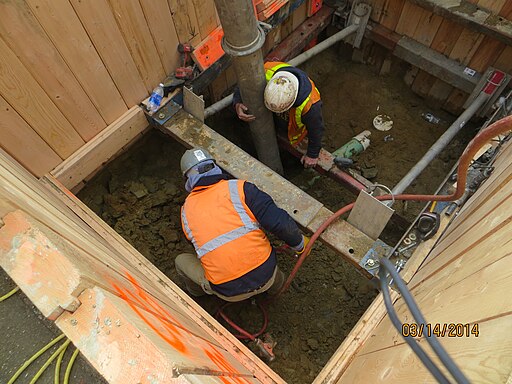
The true power of NASSCO Certification lies in the grading system. It is not enough to say a pipe is “bad.” We need to know how bad. The system uses a 1 to 5 grading scale to rank defects.
- Grade 1: This is a minor defect. It might be a small stain or very light surface damage. It does not require immediate attention.
- Grade 2: This is minor to moderate. The pipe is showing signs of age, but it is not failing.
- Grade 3: This is moderate. There might be a distinct crack or a medium amount of roots. It needs to be watched.
- Grade 4: This is significant. The pipe has serious issues that will likely cause failure in the near future.
- Grade 5: This is immediate. The pipe has collapsed, or is about to collapse. It needs emergency repair.
When an inspector enters these codes, the computer software does the math. It calculates a “Quick Rating” for the whole pipe segment. This gives the city or the owner a snapshot of their system. For example, a pipe with a score of “1100” is perfect. A pipe with a score of “5555” is a disaster.
At RAVAN AIR, we do not rely on gut instinct. We rely on the math provided by the NASSCO Certification standards. This allows our clients to plan their budgets. They can spend their money on the Grade 5 pipes first and leave the Grade 1 pipes for later. Without this system, they might spend millions fixing pipes that are actually fine.
The Certification Process: A High Bar for Entry
Getting this certification is not easy. It is not something you can just buy online. It requires dedication and study. The process filters out people who are not serious about the industry.
Rigorous Training
To earn a NASSCO Certification, an inspector must attend a class that typically lasts three days. These classes are taught by Master Trainers who have years of experience. The class covers everything from the history of the program to the specific definitions of hundreds of codes.
Students learn to look at photos and videos of defects and code them correctly. They learn the difference between a “Hole” and a “Void.” They learn how to identify different pipe materials, from clay to PVC to cast iron. It is a lot of information to absorb. At the end of the class, there is a difficult exam. You must pass this exam to get your certification number.
Recertification Cycle
The learning does not stop after the exam. The industry changes, and the codes change. That is why NASSCO Certification is only valid for three years. Every three years, inspectors must recertify. This ensures that they are up to date on the latest rules.
For example, NASSCO recently released Version 8.0 of the standard. This version added new codes and changed some old ones. If an inspector does not recertify, they are using outdated logic. At RAVAN AIR, we ensure all our team members stay current on all safety related certifications. We view the cost of training as an investment in quality.
Cost vs. Value
Some companies complain about the cost. It can cost over $1,000 per inspector to get certified, plus the cost of the time away from work. But you have to look at the value. One bad call on a pipeline project can cost ten times that amount.
If an uncertified inspector misses a major structural fault, a road could collapse a month later. If they call a root ball a “structural defect,” the city might waste money digging up a pipe that just needed to be cleaned. The NASSCO Certification pays for itself by preventing these costly errors.
Trends in Underground Assessment
Here at RAVAN AIR, we keep a close eye on where our industry is going by using the latest technology. The world of underground piping is becoming more high-tech every day. The NASSCO Certification is evolving to keep up with these changes.
PACP Version 8.0 and Beyond
The move to Version 8.0 was a big step. It cleaned up a lot of the confusion in the older versions. It provided better definitions for things like grout testing and lining. It showed that NASSCO is listening to the people in the field. They are constantly refining the language to make it more precise. This evolution keeps the standard relevant.
AI and Automated Defect Recognition (ADR)
Everyone is talking about Artificial Intelligence (AI) right now. In our industry, we call it Automated Defect Recognition, or ADR. The idea is that a computer can watch the sewer video and find the defects automatically.
Some people think this will replace the human inspector. However, we disagree. NASSCO has taken a very smart stance on this. They believe that AI is a tool to assist the inspector, not replace them. An AI might flag a dark spot as a hole, but a human with NASSCO Certification needs to verify it. The human understands context. The human knows if that dark spot is just a shadow or a real problem.
AI helps us speed up the process, but the final responsibility lies with the certified professional. We use these tools at RAVAN AIR to make our inspectors more efficient, but we never take the human eye off the data.
3D Modeling and LiDAR
We are also seeing a move toward 3D data. New cameras can use lasers and LiDAR to build a 3D model of the pipe. This gives us exact measurements of ovality (how round the pipe is) and capacity.
NASSCO Certification is beginning to incorporate these technologies into the standards. They are working on ways to code data that comes from these advanced sensors. This is the future of our industry. We will not just be watching videos; we will be analyzing digital twins of the underground network.
Why RAVAN AIR Invests in NASSCO Certification
You might wonder why a company like RAVAN AIR cares so much about a certificate. It comes down to our core values: innovation, data integrity, and competence. We are not just digging holes; we are providing intelligence.
Commercial Application
For our commercial clients, time is money. They cannot afford to shut down a factory or a refinery because of a sewer backup. When we inspect their lines using NASSCO Certification standards, we give them a clear roadmap. We tell them exactly what needs to be fixed now and what can wait. This helps them manage their assets efficiently.
We provide reports that plug directly into their Geographic Information Systems (GIS). This means our data becomes part of their permanent record. It is seamless and professional.
Risk Mitigation
For our utility clients, risk is the enemy. They are responsible for public safety. If a sewer collapses, it is a public relations nightmare and a legal liability. By using NASSCO Certification, we provide them with a defensible record.
If a lawsuit happens, we can show the data. We can prove that the inspection was done according to the national standard. We can show that the defect was graded correctly based on the rules at the time. This protects our clients and it protects us. It turns a subjective argument into an objective fact.
Quality Assurance
Finally, it is about pride. Requiring NASSCO Certification for our team is our way of saying we are the best at what we do. We hold ourselves to the highest standard because our clients deserve it.
Commonly Asked Questions about NASSCO Certification
There are a lot of questions about this process. Here are some of the most common ones.
What is the difference between PACP and MACP?
This is the most common question. PACP stands for Pipeline Assessment Certification Program. It is used for the horizontal pipes that carry the water and waste. MACP stands for Manhole Assessment Certification Program. It is used for the vertical structures that allow us to access those pipes. You need PACP to inspect the line, and MACP to inspect the manhole. They work together, but they are different skills.
How much does NASSCO certification cost?
The cost can vary depending on who is hosting the training and if it is in-person or virtual. generally, you can expect to pay between $1,000 and $1,200 for the initial training course. Recertification is usually cheaper, often around nearly half the price of the initial class. While it seems like a lot, the return on investment is huge when you consider the value of the data.
How long is NASSCO certification valid?
Your certification is valid for three years from the date you pass the exam. You must recertify before your expiration date. If you let it lapse, you might have to take the whole course over again. Keeping track of your expiration date is crucial for staying active in the industry.
Can AI replace NASSCO inspectors?
No, AI cannot replace them yet. AI is a powerful tool that can help identify potential defects, but it lacks the judgment of a trained human. The NASSCO Certification teaches inspectors to understand the context of what they are seeing. AI can speed up the work, but the certified inspector is the one who signs off on the accuracy of the data.
Conclusion
The underground infrastructure of our country is vast and complex. To manage it, we need clarity. We need a common language that bridges the gap between the video screen and the engineer’s desk. NASSCO Certification provides that language.
Through the rigorous training of PACP, MACP, and LACP, inspectors learn to see the underground world with precision. They turn blurry images into hard data. They allow cities and businesses to make smart decisions with their limited budgets.
At RAVAN AIR, we believe that quality data is the foundation of a safe and efficient world. Whether you are managing a municipal sewer system or an industrial complex, you should demand that your inspections are done by NASSCO certified professionals. Do not settle for guesswork. Demand the standard.