News
What is a Cross Bore Inspection? Essential Utility Safety Guide
In the world of underground construction, what you cannot see can hurt you. Modern technology has given us incredible tools to lay new pipe without tearing up entire streets. We call this trenchless technology. It is efficient, it is cleaner, and it is faster. But it has introduced a hidden, latent danger into our utility infrastructure: the cross bore.
A cross bore occurs when a new utility line—most often a natural gas line—is drilled right through an existing utility line, usually a sewer pipe. It happens silently underground. On the surface, everything looks perfect. The new gas line works, and the sewer keeps flowing, at least for a while. But a ticking time bomb has been created.
At RAVAN AIR, we believe that data integrity is the only defense against this risk. We do not guess what is underground; we verify it.
This is where the cross bore inspection comes into play.
A cross bore inspection is not just an optional extra step; it is a critical part of the safety protocol. It is the only way to ensure that our emphasis on efficient construction does not compromise public safety.
Understanding what a cross bore inspection is, and why it is essential, is mandatory for anyone involved in utility work, from the project manager to the homeowner.
What is a Cross Bore Inspection?
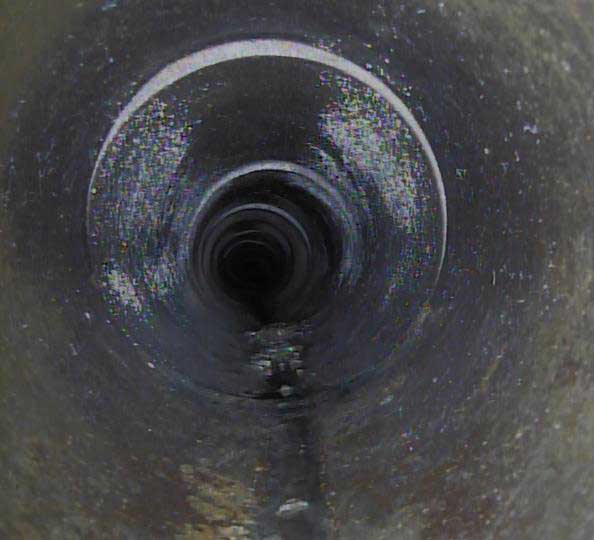
A cross bore inspection is a specialized visual check of underground utility lines to ensure they have not intersected. The primary goal is to verify that a newly installed utility (like a gas line) has not passed through an existing structure (like a sewer).
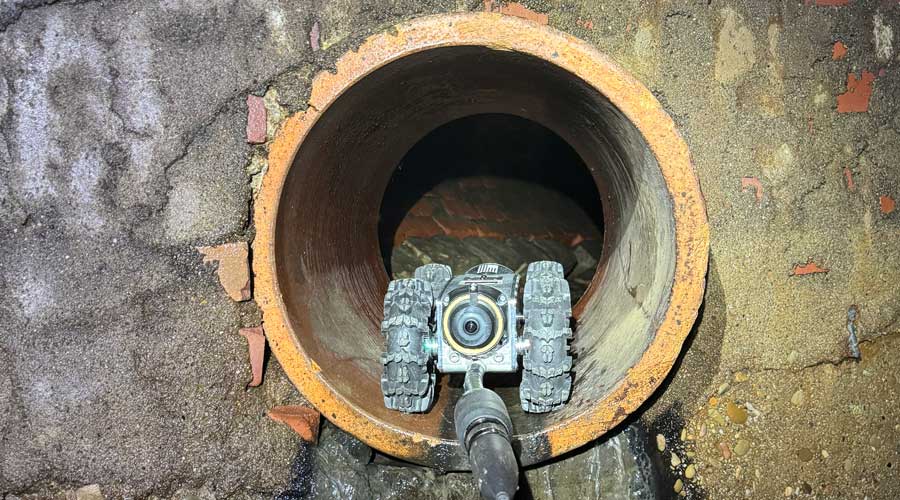
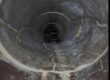
Because we cannot physically crawl into these small pipes, we use advanced camera technology. A cross bore inspection typically involves inserting a robust, waterproof camera into the sewer system.
There are generally three phases where a cross bore inspection might be utilized:
Pre-Construction Inspection
Before any drilling begins, a cross bore inspection can be used to “map” the area. By running cameras through the sewer laterals first, we can locate exactly where they are. We can use a sonde, a small radio transmitter attached to the camera, to send a signal to the surface. A technician on the ground marks the exact path and depth of the sewer. This gives the drill operator the data they need to avoid the pipe entirely.
Post-Construction Inspection
This is the most common type of active cross bore inspection. Immediately after a new utility has been installed via HDD, inspectors will go to every house along the route. They will run a camera from the main sewer line up into each house’s lateral line. They are looking for visible signs of the new black or yellow gas pipe cutting across the sewer view. If they find one, it can be repaired immediately before it becomes a danger.
Legacy Inspection
This involves going back to older neighborhoods where trenchless technology was used years ago, before cross bore awareness was high. Utility companies often launch massive projects to perform a cross bore inspection on thousands of homes to ensure no ticking time bombs were left behind from previous work.
Tools of the Trade for Inspection
Performing a high-quality cross bore inspection requires specific technology. You cannot just use any standard drain camera.
- CCTV Crawlers: For main sewer lines, we use rugged, robotic cameras on wheels. These can travel long distances and have high-resolution lenses that can pan and tilt to look directly into the openings of lateral pipes.
- Lateral Launch Cameras: This is a critical tool for cross bore inspection. It is a main line crawler that carries a second, smaller camera. When the main crawler reaches a house’s lateral connection, it can “launch” the second camera up that smaller pipe toward the house. This allows the inspection to be done from the street without needing to enter the homeowner’s house.
- Push Cameras: Sometimes, we must work from the house outward. A push camera is a smaller camera head on a stiff, long cable that a technician manually pushes down a basement cleanout or roof vent.
Every cross bore inspection must be recorded. The video data is reviewed by trained analysts who know exactly what a cross bore looks like. They are not just looking for a pipe right in the middle; they are looking for debris piles, cracks, or humps in the pipe that might indicate a “near miss” that still caused damage.
Prevention and Best Practices for Utility Safety
At RAVAN AIR, prevention is always superior to reaction. A cross bore inspection is the best tool we have for verifying safety, but it is part of a larger safety culture.
You may have heard of “Call 811,” the national “Call Before You Dig” service. This is essential. You must always call 811 before doing any digging. However, 811 has limitations. In many states, utility companies only mark the public portion of utilities. They might not mark the private sewer lateral that runs through your yard.
This is why we cannot rely solely on 811 markings to prevent cross bores. We must use more aggressive tactics.
Potholing is one such practice. This involves digging a small, vertical test hole (often using a vacuum truck that sucks up dirt rather than a shovel that could hit a pipe) to physically see the existing utility. If we know we are drilling near a large sewer main, we might “daylight” that main—expose it to fresh air—so we can watch the drill head pass safely by it with our own eyes.
However, you cannot pothole every single sewer lateral in a neighborhood; it would be too disruptive. That is why the cross bore inspection remains the gold standard for these laterals. It is non-destructive to the homeowner’s lawn but gives us 100% certainty of what is happening underground.
Who is Responsible?
Safety is a shared responsibility, but the burden often falls heavily on the utility company installing the new line and their contractors. It is their duty to ensure their new asset has not compromised an existing one.
However, homeowners also play a role. If you know you have a septic tank or an unusual private utility line, you must communicate that to contractors working in your area.
If you are a homeowner and you ever experience a sewer blockage soon after utility work has been done in your street, do not just assume it is routine. Ask your plumber to perform a video inspection before they use a mechanical cutting tool. A quick camera check could save your life if it turns out to be a cross bore rather than tree roots.
Conclusion
Innovation in construction is necessary, but it cannot come at the cost of safety. The risk of cross bores is a solvable problem. We have the technology and the protocols to eliminate this danger entirely.
A cross bore inspection is not just a technical task; it is a commitment to the community. It is an assurance that when we walk away from a job site, the infrastructure underground is sound, secure, and safe for the families living above it.
At RAVAN AIR, we value competent, data-driven approaches to piping. We do not hope for the best; we inspect to ensure it.